How to Build Emotional Intimacy: 10 Small Steps
 By Laura from EveninaPublished
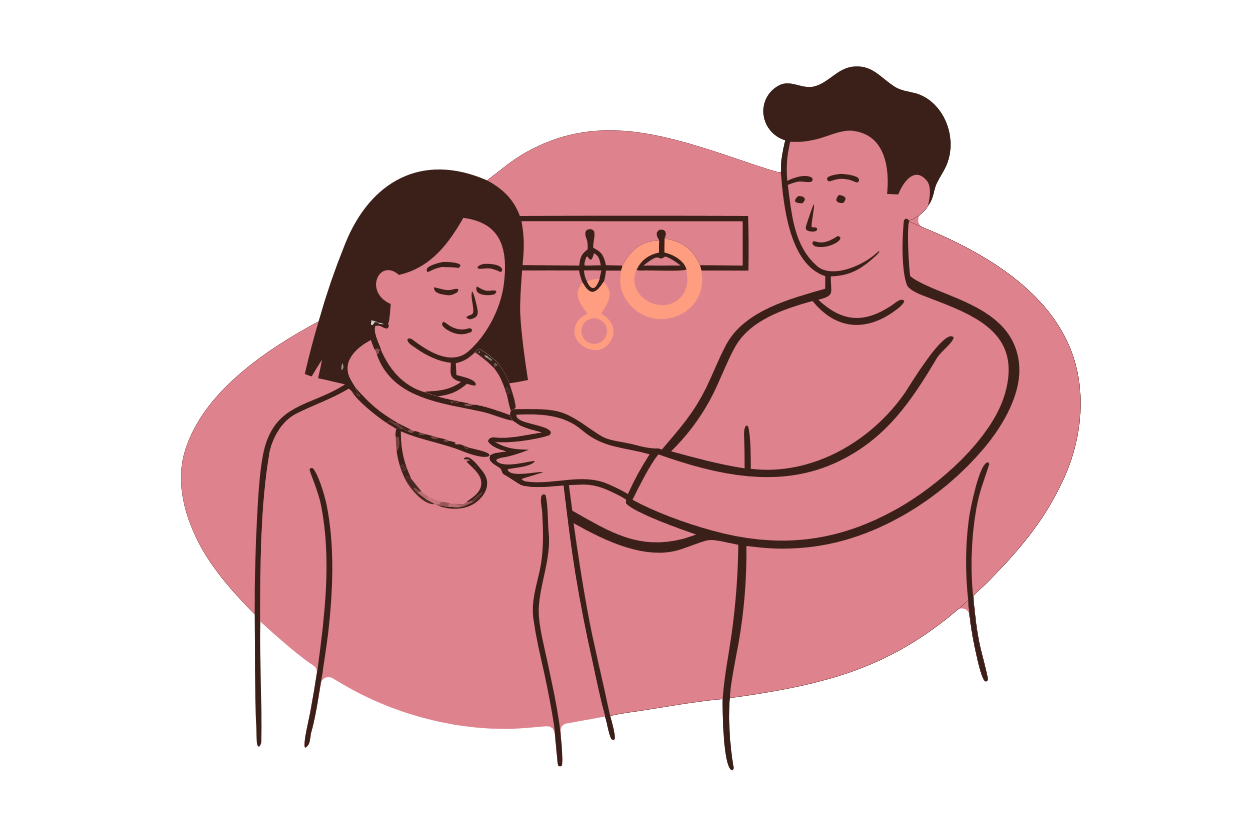
Emotional intimacy rarely comes from one big heart-to-heart. It builds in small moments that repeat: when you listen to each other, respond, touch, and let the other person see a little more of you. Below are 10 small steps for everyday life that take little time and that you can start trying today.
What emotional intimacy is made of
Closeness has two sides that belong together: feeling understood by your partner, and physical affection. A diary study of 96 married couples in the US, who answered questions every evening for 42 days, looked at the first side more closely. On days when partners shared more about themselves and felt understood in the process, they felt closer (Laurenceau, Barrett, and Rovine, 2005). So it's not just about what one person shares, but also about how the other responds. The study shows a link, not proof of cause.
For the steps below, that means you don't need a new program. You need a few moments each day when you truly turn toward each other.
In everyday life
- Arrive on purpose. When one of you gets home, both of you pause what you're doing: eye contact, a hug, a sentence. Ten seconds before anyone mentions groceries or schedules.
- Respond to small signals. "Look at this," a sigh, a photo sent to your phone. The Gottman Institute calls these small attempts to get attention "bids." According to the institute, couples who were still together six years after their wedding had turned toward these bids 86 percent of the time, while couples who later divorced had done so 33 percent of the time (The Gottman Institute). That's a link, not a recipe, but it's a good reason to look up for a moment.
- Five minutes without logistics. In the evening, spend five minutes telling each other about your day without talking about plans, errands, or to-dos. What made you happy? What's on your mind?
- Say thank you, specifically. Not "thanks for everything," but "thanks for making coffee this morning." In a study of more than 65 cohabiting couples who were surveyed daily, feeling grateful went hand in hand with feeling more connected, even the following day (Algoe, Gable, and Maisel, 2010). Again: a link, not proof.
In conversation
- Celebrate good news. When your partner shares something good, ask follow-up questions and be happy with them instead of moving on: "Tell me, how did it go?"
- One question a night. A single good question is enough for a conversation that feels different from usual. You'll find ideas in our questions for couples.
- Share something your partner doesn't know yet. A memory, a thought, a wish. Openness invites openness, and that back-and-forth is exactly what the diary study above describes.
Through touch and time together
- Touch without an agenda. A hand on the back, sitting side by side on the couch, feet in a lap. Touch that doesn't want anything except to be there. In a study of 102 couples in Switzerland who answered short questions four times a day for a week, touch went along with better mood and a greater sense of closeness, both for the person being touched and the person doing the touching (Debrot and colleagues, 2013). The couples were mostly young and satisfied, and this study also shows a link, not proof.
- Try something new together. A class, a recipe, a place you've never been. Why shared new experiences can do a relationship good is something we explain in our at-home date night ideas.
- A regular night for the two of you. One evening a week that belongs only to you, even if it's short. Take turns planning it.
How to bring it up
If you'd like more closeness, it helps to say it as a wish rather than a complaint:
- Talk about yourself: "I miss our evenings on the couch" instead of "You never have time."
- Come with a small suggestion, such as one of the steps above.
- Pick a calm moment, not in the middle of an argument or right before you fall asleep.
- Ask what your partner would like. Closeness doesn't look the same for everyone.
When closeness has been missing for a while
A lack of emotional intimacy isn't a verdict on your relationship. Work, kids, worries, or simply habit can make those small moments rarer without either of you doing anything wrong. That's exactly when small steps are often easier than a big fresh start: they don't ask anyone to change everything at once.
Start with one step, not ten. Choose the one that feels easiest for both of you and try it for a week. If you find you can't move forward on your own, or that a bigger conflict is behind the distance, couples counseling can help. That's not failure. It's another way of making time for each other.
Frequently asked questions
How soon will we notice a difference?
There's no general answer. The studies above observed links in everyday life, but they didn't measure how long it takes for things to change. Sticking with it matters more than speed.
What if only one of us wants more closeness?
That's not a sign that something is wrong. Talk about what closeness means to each of you. For one person it's time to talk, for the other it's touch or doing things together.
What if my partner doesn't join in?
Start with yourself. Many of these steps, like arriving on purpose, saying thank you specifically, or responding to small signals, are things you can begin on your own. Often that's the kindest invitation there is.